Choosing the best Pof Packaging Film from China requires more than comparing prices or glossy product photographs. The right film must perform reliably on real production lines, under changing temperatures, speeds, and packaging shapes. A clear sample may look impressive, yet fail during sealing, shrinkage, or transportation. Small details matter, including thickness tolerance, shrink ratio, tear strength, haze, and roll consistency.
Walter Soroka, a respected packaging educator, defined packaging as “a coordinated system of preparing goods for transport, distribution, storage, retailing, and end-use.” His words apply directly to Pof Packaging Film. A strong film should protect the product, support efficient packing, and maintain its appearance from the factory to the customer’s hands. It should also run smoothly through shrink tunnels without excessive wrinkles or unpleasant odor.
Chinese suppliers offer many options, including single-wound, center-folded, perforated, and printed films. However, the best choice depends on the product, machine, and shipping environment. A film for boxed food may not suit bottles, stationery, or irregular retail items. That is where buyers must examine technical data, test rolls, and production feedback. Cost alone can mislead.
There is no perfect film for every application. Sometimes, a slightly thicker film reduces waste by preventing rework. Sometimes, a cheaper roll creates hidden losses through jams and poor sealing. This guide examines how to compare Chinese suppliers, verify quality, and select Pof Packaging Film with greater confidence.
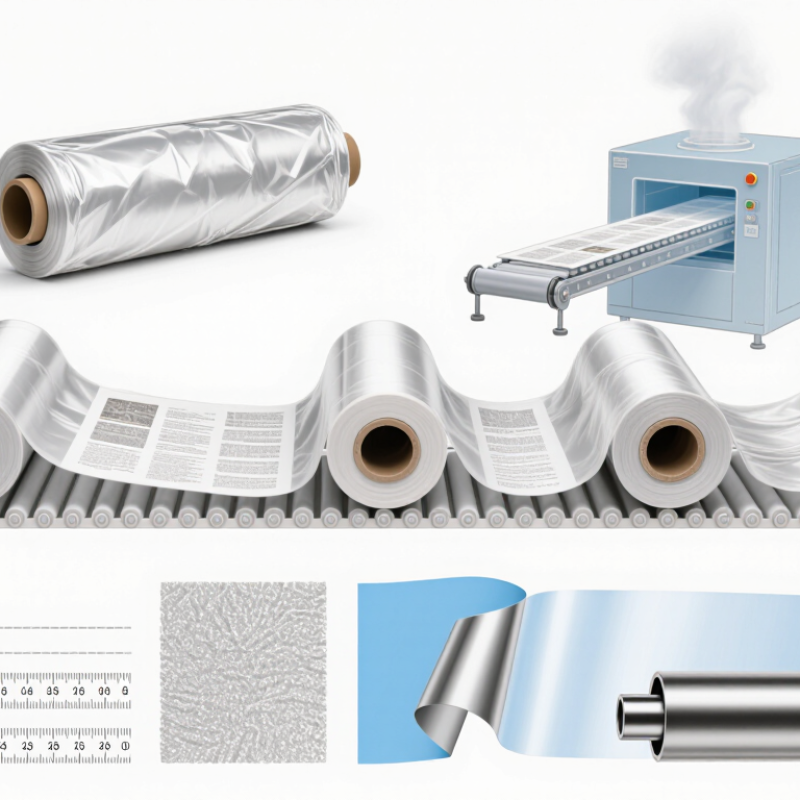
POF packaging film is a transparent, multilayer polyolefin film used for wrapping products. It is commonly made by co-extruding several polyethylene-based layers. During manufacturing, the film is stretched in two directions. This creates memory inside the material. When heated, it contracts around the product. A heat tunnel or hot-air gun activates this shrink response. The film then cools into a tight, clean package.
In daily production, operators place products inside the film, seal the edges, and apply controlled heat. The film shrinks evenly around boxes, food trays, books, and household items. Good POF film offers clear visibility, smooth sealing, and useful puncture resistance. It should not become brittle during ordinary storage. Thickness matters. A thin film may reduce material use, but it can tear around sharp corners. A thicker grade may protect better, though it can require more heat and cost more.
When choosing POF packaging film from China, inspect more than a glossy sample. Ask for thickness tolerance, shrinkage data, seal strength, and batch records. Test the film on your own machine. Tunnel temperature, line speed, and package shape can change results. I have seen attractive film perform poorly when sealing settings were copied from another production line. That is an easy mistake. Reliable suppliers should explain limitations, not promise perfect performance.
Chinese suppliers offer several POF film types for different packaging conditions. The common option is three-layer co-extruded POF film, often used for boxes, books, toys, and household products. Five-layer film provides better thickness control and sealing stability. Center-fold film suits automatic wrapping lines, while single-wound film fits manual or semi-automatic machines. Some factories also supply high-shrink film, perforated film, anti-static film, and printed POF film.
Shrink performance varies by structure. High-shrink grades can tighten around irregular products, but excessive heat may distort thin packaging. Cross-linked POF film usually offers stronger puncture resistance and cleaner machine running. Anti-static grades help reduce dust attraction during handling. According to Grand View Research, the global shrink films market was valued at about USD 7.8 billion in 2023, with expected growth of roughly 6.5% annually through 2030. This demand is pushing Chinese producers toward thinner films and more customized structures.
Ask suppliers for shrinkage curves, sealing-temperature ranges, haze data, and certificate records. These details matter more than attractive sample rolls. A 15-micron film may reduce material use, yet it can fail around sharp corners. I have seen samples perform well on a bench but struggle on faster equipment. That gap deserves attention. Reports from Smithers also identify lightweighting and recyclable packaging structures as major flexible-packaging directions, but recycled-content POF still needs careful testing for clarity, strength, and seal consistency.
Choosing the best POF film requires more than checking gloss or price. In practical evaluations, start with thickness consistency across the roll. Uneven film can cause weak seals, wrinkles, and unstable shrinkage. Test tensile strength, elongation, shrink temperature, and seal performance on your own equipment. A film may perform well in a sample test but behave differently during continuous production.
Clarity matters too. Hold the film against a printed surface and inspect haze, pinholes, gels, and surface marks. Check the roll edges for telescoping or crushed layers. Odor should be mild and controlled, especially for retail packaging. Safety documents must match the intended use. Request technical data, test reports, material declarations, and traceable batch information. For food-contact applications, verify compliance with the regulations required in your selling market. Do not rely on a generic certificate.
Tips: Ask for production samples, not only laboratory swatches. Measure film thickness at several points. Record sealing temperature, dwell time, and shrink results. Compare samples after storage, because performance can change.
A glossy appearance can hide poor consistency. I have seen attractive film fail because its sealing window was too narrow. That mistake is easy to make. Supplier communication also deserves attention. Clear answers, stable records, and willingness to investigate defects often reveal more than a low quotation. Test carefully, and keep questioning your own assumptions.
The best POF film depends on your product, equipment, and distribution conditions. Film thickness is only one factor. A 15-micron film may reduce material use, but it can fail around sharp corners or heavy products. A 19-micron film often offers better puncture resistance and stronger presentation. Not always.
Start with shrink performance. Ask for free-shrink, shrink-force, and sealing-temperature data. These values should match your machine’s tunnel settings. A film that shrinks too aggressively may distort labels or crush lightweight packs. In practical trials, operators should test corners, handles, and stacked cartons at real line speeds. One small sample is not enough.
Seal strength matters more than glossy appearance. Measure seal integrity after heating, cooling, and transport simulation. Request certificates of analysis, gauge uniformity records, and food-contact documentation when relevant.
The OECD Global Plastics Outlook reports that only 9% of plastic waste was recycled globally in 2019. Therefore, downgauging and recyclability claims deserve careful review. Smithers’ flexible packaging market analysis also highlights material efficiency and production performance as major purchasing factors. However, these reports do not replace factory testing.
Chinese suppliers can offer competitive conversion capacity, but quality control differs between factories. Compare roll hardness, splice frequency, haze, and delivery consistency. A clear film is not automatically the best film. Choose the specification that survives your product’s weakest point.
Choosing the best POF packaging film from China starts with verifying the manufacturer, not comparing prices alone. In practical sourcing, I examine film clarity, shrink balance, sealing strength, thickness tolerance, and odor after heating. A reliable supplier should provide recent technical data, safety documentation, and batch-specific test results. Ask for samples from more than one production run. One sample can look excellent and still hide inconsistent thickness.
Request a video call from the factory floor. Check extrusion equipment, clean storage areas, roll labeling, and inspection records. Confirm whether the supplier controls raw material sources and records production parameters. Independent laboratory testing can verify shrinkage, tensile strength, seal performance, and suitability for the intended packaging application. Do not accept copied certificates without checking their dates, scope, and issuing laboratory. Communication matters too. Clear answers about lead times, defect handling, packaging, and export documents reveal operational maturity. A low quotation may exclude testing, stronger cores, or protective cartons. That mistake becomes expensive later. I also recommend a small trial order before long-term cooperation. The film may run well on one machine but wrinkle on another. Real production feedback is essential. Ask the manufacturer to review these results honestly, including failures, rather than promising perfection.
| Evaluation Dimension | Practical Benchmark or Data Range | How to Verify the Manufacturer | Suggested Weight |
|---|---|---|---|
| Film Structure | Typical POF shrink film is a multilayer polyolefin film, commonly using a polyolefin seal layer and a cross-linked or coextruded structure. Confirm whether the film is single-wound or center-folded. | Request a technical data sheet, layer-structure statement, cross-section description, and a sample roll. Check that the delivered structure matches the approved specification. | 10% |
| Thickness Consistency | Common commercial thicknesses include approximately 10, 12, 15, 19, 25, and 30 microns. A narrow thickness variation is important for stable sealing and shrink performance. | Measure multiple points across the web and along the roll with a calibrated thickness gauge. Require the supplier to define nominal thickness and allowable tolerance in writing. | 12% |
| Shrink Performance | POF shrink film commonly operates in the approximate 120–180°C shrink-tunnel range, depending on film grade, equipment, package shape, and line speed. Free shrink is often specified separately in the machine and transverse directions. | Run a controlled tunnel test using the buyer’s actual package. Record tunnel temperature, dwell time, line speed, shrink percentage, wrinkles, holes, and package appearance. | 15% |
| Tensile Strength and Elongation | Performance depends on formulation and orientation. Use the manufacturer’s declared machine-direction and transverse-direction values as acceptance criteria rather than comparing unsupported figures. | Ask for test results using ASTM D882 or ISO 527. Have an independent laboratory test retained samples from production lots. | 10% |
| Seal Strength and Seal Integrity | The correct sealing temperature, dwell time, pressure, and jaw design are equipment-specific. A suitable film should produce continuous seals without burn-through, pinholes, or easy splitting. | Perform a seal-window test and seal-strength test using the buyer’s sealing equipment. ASTM F88/F88M may be used for seal strength, while ASTM F2029 can support heat-seal testing. | 14% |
| Optical Quality | High clarity and low haze are normally required for retail presentation. Actual values depend on resin, additives, thickness, and production conditions. | Specify haze and gloss targets before ordering. Verify haze according to ASTM D1003 and inspect samples for gels, streaks, fisheyes, and visible contamination. | 8% |
| Coefficient of Friction | Film must balance slip and grip for smooth unwinding, feeding, collating, and sealing. Excessively high or low friction can cause film tracking and feeding problems. | Request static and kinetic coefficient-of-friction data tested under defined conditions, such as ASTM D1894. Confirm performance on the buyer’s packaging line. | 8% |
| Food-Contact and Regulatory Documentation | Requirements vary by destination and application. Common documentation may include food-contact declarations, migration test reports, and compliance statements for applicable regulations. | Match the film formulation and intended use with the destination-market requirements, such as applicable U.S. FDA regulations, European Union food-contact rules, or China GB 4806.7. Check report scope, date, sample identity, and laboratory accreditation. | 12% |
| Production and Quality Systems | A reliable supplier should maintain documented incoming-material controls, in-process checks, roll traceability, nonconformance handling, and final inspection records. | Request current certificates where applicable, a quality manual summary, batch records, calibration records, and a recent third-party factory audit. Verify the legal entity and production address. | 10% |
| Roll and Packaging Control | Important data includes roll width, winding direction, roll length or net weight, core size, splice policy, edge condition, and moisture-protection method. | Inspect roll labels and packaging. Confirm that lot number, production date, width, thickness, quantity, and inspection status are traceable to the certificate of analysis. | 5% |
| Sampling and Pre-Shipment Inspection | Use a written sampling plan based on order size and risk. ISO 2859-1 provides a commonly used framework for attribute-based acceptance sampling. | Approve a golden sample, define critical and major defects, inspect random cartons or rolls, and retain signed inspection records before shipment. | 6% |
| Total Suggested Evaluation Weight | 100% | ||
POF packaging film is a clear, multilayer polyolefin material. It wraps boxes, trays, books, and household products. It is stretched during production. Heat activates its shrinking memory.
Operators place products inside the film and seal the edges. A heat tunnel or hot-air gun warms the material. The film contracts evenly and cools tightly around the product. Then it holds.
Look for clear visibility, smooth seals, stable shrinkage, and useful puncture resistance. The film should remain flexible during normal storage. It should not tear easily at ordinary corners.
Thin film can reduce material use and cost. However, it may tear around sharp edges. Thicker film can provide stronger protection. It may need more heat and cost more.
Request production samples, not only small laboratory swatches. Test the film on your own machine. Record tunnel temperature, line speed, sealing time, and shrink results. Real equipment matters.
Measure thickness at several points across the roll. Check shrink temperature, tensile strength, elongation, and seal strength. Inspect for pinholes, gels, haze, and surface marks. Small defects matter.
Yes. Gloss can hide uneven thickness or weak sealing. A narrow sealing window may cause failures during continuous production. I may overvalue appearance sometimes. Testing corrects that mistake.
Ask for technical data, test reports, material declarations, and traceable batch records. Food-contact packaging also needs market-specific compliance evidence. A generic certificate is not enough.
Check for telescoping, crushed edges, uneven layers, and unstable winding. These issues can create wrinkles or poor seals. Inspect the roll carefully. Samples can mislead.
Compare film before and after storage. Check clarity, odor, seal strength, and shrink performance. Results may change over time. Keep questioning the original assumption.
Pof Packaging Film is a transparent, heat-shrinkable material commonly used to bundle, protect, and present products. It works by shrinking evenly around an item when exposed to controlled heat, creating a tight, clean, and durable package. Chinese suppliers may offer different film structures, thicknesses, widths, shrink ratios, and surface finishes, including single-layer and multilayer options designed for manual, semi-automatic, or fully automatic packaging equipment.
Choosing the best film requires evaluating clarity, sealing strength, shrink performance, puncture resistance, consistency, and suitability for the product and packaging machine. Safety documentation, production standards, quality-control procedures, and material traceability should also be reviewed. The right choice depends on product shape, required protection, packaging speed, storage conditions, appearance, and budget. To select a reliable Chinese manufacturer, buyers should verify factory capabilities, request technical data and samples, conduct trial packaging tests, confirm inspection procedures, and communicate clearly about specifications, lead times, and after-sales support.

Tianchen Materials